

If your company is based in the Balkans, it’s easy to assume a new EU regulation doesn’t affect you. But the EU Pay Transparency Directive (which becomes mandatory for all EU companies with over 100 employees by 2026) is already reshaping expectations around fairness, compensation, and career growth across the region. Even without legal pressure, its influence is spreading rapidly to non-EU countries, as well.
You’re already competing with EU-based companies for top talent, clients, and partnerships. As these organizations adopt transparent pay bands and structured career paths, professionals in the Balkans will expect the same. Adopting these standards early isn’t just compliance-inspired — it’s a strategic move that strengthens your culture, builds trust, and helps you attract and retain the best talent in the region.
The EU Pay Transparency Directive: what it changes and why it matters
The EU Pay Transparency Directive, adopted in May 2023, isn’t just a new rulebook for EU members; it's a statement about the future of work.
Key requirements of the Directive
The Directive's goal is to empower employees and create a culture of fairness. It does this by focusing on three main pillars:
- Mandatory reporting of gender pay gaps. Companies with 100 or more employees will need to regularly report their gender pay gaps.
- The right for employees to request information on pay levels. Employees will be able to request details on salary levels for their role and for roles with similar value.
- Requirement to provide salary bands in job postings. The days of opaque salary conversations are over. This mandate forces organizations to be upfront about compensation from the very start.
💡 The EU Pay Transparency Directive already influences global practices. Companies in regions like the Balkans will feel its impact as EU clients and top talent expect the same transparency standards.
Why the Directive’s influence extends beyond the EU borders
Even though the EU Pay Transparency Directive doesn’t legally apply to companies outside the EU, its impact is already being felt in the Balkans.
You’re part of a global ecosystem. Many regional organizations, especially in the tech sector, work directly with EU clients. As these clients adjust their practices, they will expect their partners to operate with similar levels of transparency and fairness.
You’re competing in a global talent market. The best talent is not confined by borders. When a top-tier professional is considering a role in Balkan companies versus an EU-based one, the promise of transparent career development and fair pay will become a key differentiator. Without it, you risk losing your most valuable people.
From gut-feeling decisions to data-driven ones: the need for structure
It’s clear what the EU’s asking for: transparency, fairness, and data to back up every pay decision. What does that exactly mean for Balkan companies?
Even if the EU Pay Transparency Directive isn’t legally binding in the Balkans, the shift it introduces already affects how employees think about compensation. For many organizations, promotions and raises still rely on unwritten rules and ad hoc negotiations.
Vague job titles and undefined responsibilities make it impossible to ensure fair pay. Two employees with the same title can end up doing completely different work, undermining transparency and creating distrust. When there are no clear criteria for salaries or promotions, employees start to question leadership decisions, and that uncertainty quickly spreads through the organization.
This lack of structure doesn’t just create confusion; it also allows pay inequality to grow quietly over time.
Studies show that women are often less likely to negotiate aggressively or are penalized when they do, which further widens the gap. Without objective frameworks, even well-intentioned leaders can perpetuate inequality without realizing it.
💡 According to the EU Council, the EU Pay Transparency Directive aims to close the gender pay gap, which still averages 13% across the EU.
However, gender is only the most visible example of a broader issue: when compensation decisions rely on subjective judgment instead of measurable criteria, any group, regardless of gender, department, or role, can be unfairly affected.
That’s where structure becomes essential.
By adopting structured criteria, organizations can finally move away from bias-driven decisions and start closing the gender pay gap, while also building a transparent system that benefits everyone. That’s the first real step toward lasting fairness and alignment with the standards the Directive is setting across Europe.
The solution: a transparent job leveling framework
With a problem as systemic as pay transparency, the solution can’t be an ad-hoc fix. It requires an objective system that connects skills, performance, and compensation. This is where a job leveling framework becomes essential, especially as the EU Pay Transparency Directive sets new expectations around fairness and accountability.
What is a job leveling framework?
A leveling framework is a structured system that defines and communicates career progression through clear tracks, role descriptions, and expected skill ranges. It becomes the foundation for fair compensation and transparent career development.
Instead of relying on subjective judgments, a leveling framework links employees to defined levels and salary bands, allowing companies to achieve real pay transparency and clearly show what is expected at each stage of a career.
This system also ties directly into a competency framework, outlining the hard and soft skills employees need to succeed and advance.
Key benefits of having a transparent job leveling framework for Balkan companies
Implementing a job leveling framework isn’t just a nice upgrade. It’s becoming a necessity for any Balkan organization that wants to stay competitive as the 2026 EU Pay Transparency Directive reshapes expectations around compensation and fairness, even beyond EU borders.
Attracting and retaining talent
As EU companies adopt transparent pay bands and structured career paths, Balkan employees will expect the same. A visible leveling system shows candidates and current employees how they can grow, what is expected of them, and how compensation is determined.
This makes your organization a safer, more attractive choice when competing with EU employers already ahead on transparency.
For example, a “Senior Engineer” in one team shouldn’t mean something completely different in another team. That inconsistency is exactly what top talent notices and avoids.
Boosting employee engagement
The Directive’s focus on measurable, objective criteria highlights a common issue in many Balkan organizations: promotions based on gut feeling, negotiation strength, or inconsistent expectations.
A leveling framework fixes this by making criteria visible and consistent. When people understand the standards for advancement — and see they’re applied fairly — engagement rises and uncertainty drops.
Achieving pay equity
Pay transparency requires more than sharing numbers; it requires a structure that explains them.
A leveling framework provides the backbone companies need to justify compensation in line with the Directive’s expectations. By tying salaries to objective levels and clearly defined competencies, organizations can identify gaps, address inconsistencies, and prevent bias from influencing pay decisions.
How Kadar supports a transparent pay structure

The pay transparency challenges brought on by the new EU directive can seem overwhelming at first. But instead of treating them as a compliance headache, you can turn them into an opportunity to build a more structured, fair, and competitive organization.
This is where tools like Kadar come in.
Kadar is a skill-based performance review and talent management platform designed specifically for tech teams. It helps HRs, managers, and executives make clear, data-backed people decisions by structuring career development, defining expectations, and connecting performance with career growth, all without administrative overload.
What you need to build a fair pay system
To build a transparent pay system that aligns with the 2026 EU Pay Transparency Directive, organizations need more than salary bands. They need a structured way to define roles, evaluate performance objectively, and apply criteria consistently across teams. These three elements work together to create a leveling framework that’s fair, measurable, and easy to maintain.
Customizable leveling frameworks
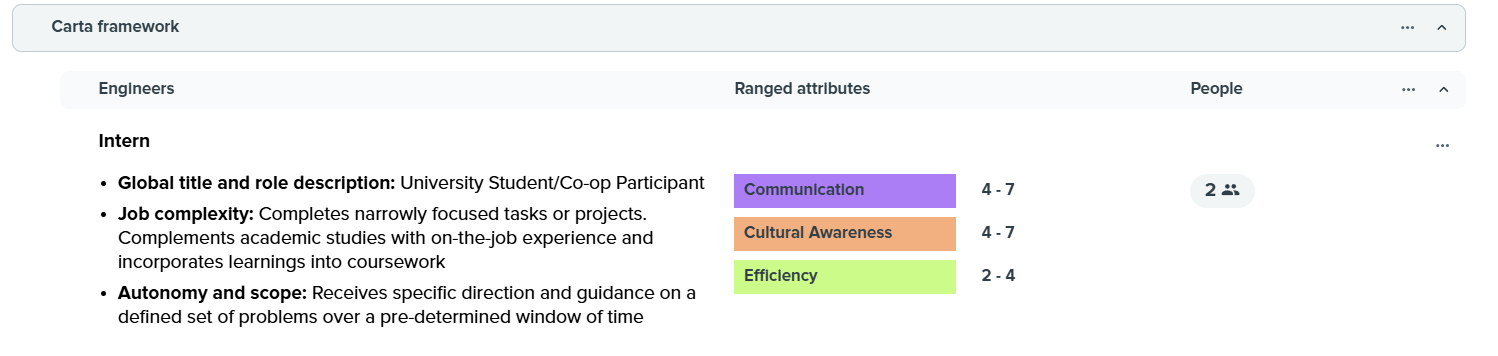
You can define and communicate career development through structured tracks, role descriptions, and expected skill ranges that align with your organization. Assigning employees to levels and making them visible across your team helps create clarity around expectations and pay bands, the foundation of real pay transparency.
360 performance reviews

Kadar connects performance directly with levels and compensation. With that, managers gain a clear overview of progress, and employees understand how their development contributes to their career growth. The feature includes structured performance reviews, 360 feedback, action plans, summaries of one-on-one meetings, and historical progress tracking.
Dedicated expert support

Kadar doesn’t just provide software; it helps you build the right system. Kadar’s team works directly with HRs and leadership to define levels, role descriptions, and transparent growth criteria, all aligned with the 2026 EU Pay Transparency Directive. Kadar’s experts help you translate your team’s real structure into a tailored leveling setup, ensuring your organization is ready to meet future requirements with confidence.
More than compliance: a statement about the future of fair work
The EU Pay Transparency Directive isn't a future problem; it's a present opportunity. By proactively building a transparent and fair system now, your organization can be seen as a leader in a competitive market. You will not only prepare for what's to come but also gain a significant advantage in attracting and retaining top talent.
If your team still relies on ad hoc promotions and vague job titles, now is the time to introduce structure. With Kadar, building a transparent leveling system becomes simple and sustainable.
Try Kadar and start building transparent career paths for everyone — today.