

Your team probably already has an HR system in place. It seems to cover the basics: goals are written down somewhere, performance reviews happen occasionally, and HR manages to keep track of feedback.
Over time, though, cracks begin to show. Feedback gets lost across chat threads and documents. Goals are set but rarely revisited. HR spends hours consolidating information instead of focusing on people’s growth and development.
This article is for teams that have grown beyond makeshift solutions but aren’t sure if it’s worth switching to a new talent management tool yet. For many, the question is whether investing in HR software for small businesses is truly worth the switch.
We’ll examine the warning signs showing your current HR setup is no longer serving you, and how transitioning to the right talent management tool can be far less painful and far more valuable than most teams expect.
Your current HR setup is holding you back
Most teams don’t notice the early signs that their talent management setup is no longer enough. Everything seems “fine” on the surface — goals exist somewhere, reviews happen eventually, and feedback is captured in different places.
But once your organization exceeds 30 or 40 people, the cracks get harder to ignore. What felt manageable with a smaller team becomes scattered, outdated, or too dependent on manual work.
Here are the signals that usually appear first:
- Review cycles arrive with no complete record of past 1:1s.
- Goals get set but slowly fade into the background, buried in Notion pages or forgotten documents.
- HR wants to focus on retention and development, but ends up fixing data, cleaning spreadsheets, or updating dashboards.
These issues don’t show up all at once.
They build slowly, creating friction until “good enough” becomes costly. At that point, you’re not doing talent management; you’re maintaining a patchwork system that puts HR, managers, and employees at a disadvantage.
Why switching HR tools feels harder than it really is
Many teams hesitate to switch an HR tool. After all, “we already have something that works,” even if imperfectly. Under the surface, two barriers play the biggest role: the human side of change and the procedural overhead of evaluating options.
Behaviorally, teams stall when there is no clear ownership for the change, no cadence for check-ins, and no definition of what success looks like. Without those anchors, even the most powerful HR software for small businesses can end up unused and undervalued.
💡 According to Gartner, only 32% of mid- to senior-level business leaders report achieving healthy employee adoption of change, highlighting that resistance to change is often more behavioral than technical.
Procedurally, the hurdles are just as real:
- Economic risk (concerns about cost, time, and whether the new talent management system will prove its value)
- Learning and setup costs (the effort required to adopt and master a new platform, again)
- Evaluation headaches (searching and comparing talent management software can feel overwhelming)
Psychologists call this the “paradox of choice”: the more options we have, the harder it becomes to decide, and the less satisfied we feel once we choose.
On the HR software market, this plays out daily. With dozens of talent management software targeting small and growing teams, decision paralysis is real. Many platforms promise to do everything, but too often they either fall short in talent management or add unnecessary complexity. This is especially true for HR software designed for small businesses, where development, performance reviews, and compliance must fit within tight budgets.
By combining the emotional and logistical factors, it becomes clear why teams often get stuck in a “better the devil you know” mindset, even when that devil is holding them back.
What makes moving to a new talent management tool painless
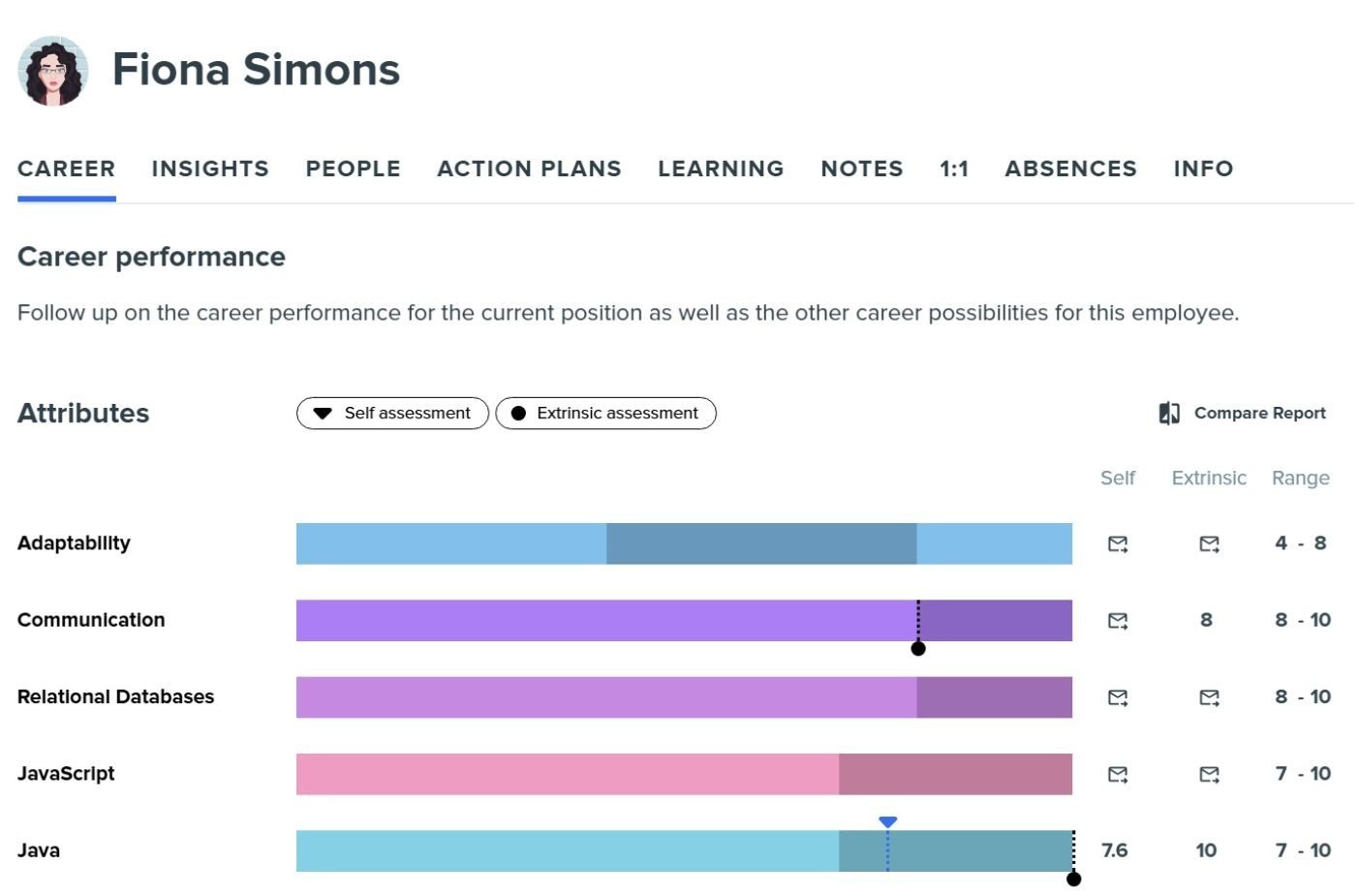
Switching systems doesn’t have to be disruptive. With the right plan, it can feel like an upgrade: less admin, more structure, and faster progress.
💡 Research shows that while HR tech investments are substantial, 50% to 75% of organizations actually believe they receive value from these major technology deployments.
Here’s how HR tools like Kadar remove friction from the transition to modern talent management (and why they work for teams looking for HR software for small businesses as well as scaling tech orgs):
Guided onboarding in three simple steps
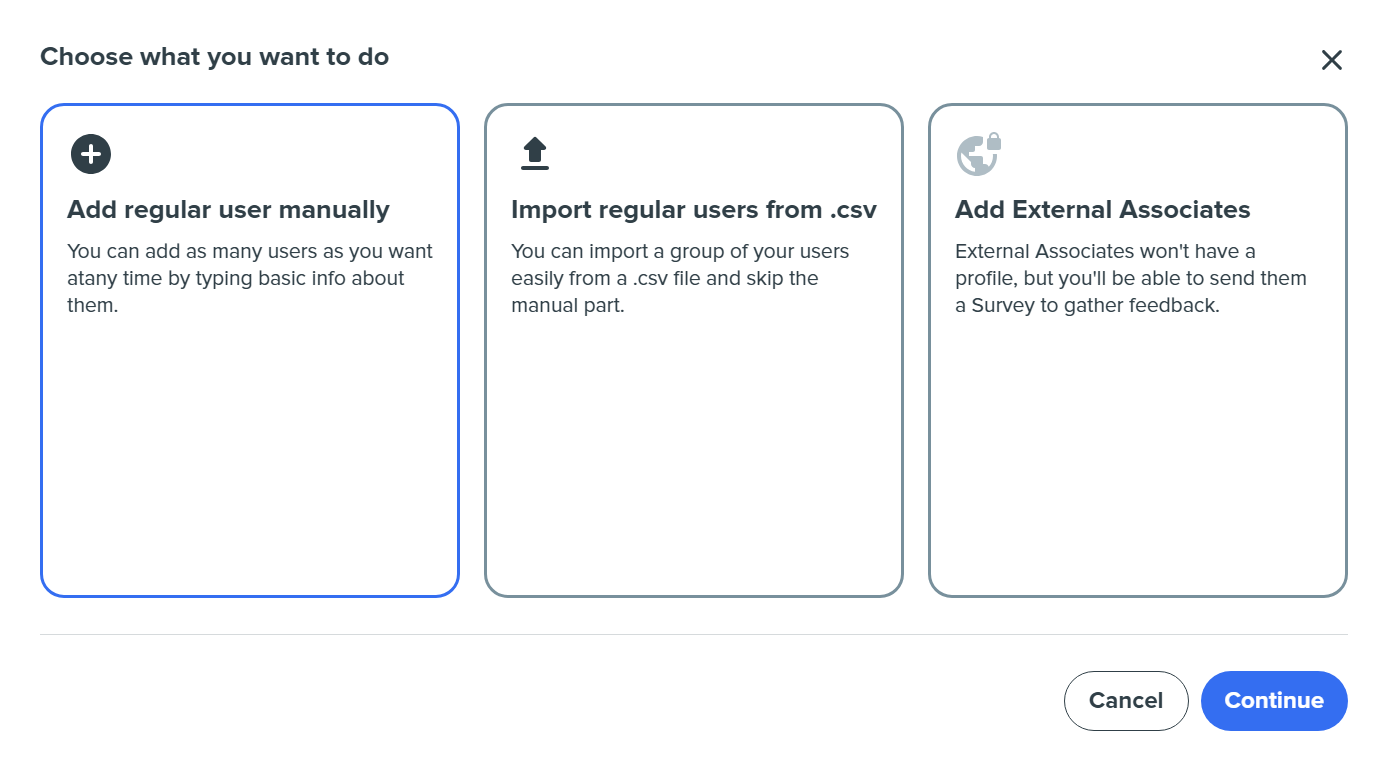
Onboarding doesn’t look the same for every team. Some prepare for an upcoming performance review cycle, while others start by setting up their job leveling framework. The process adapts to what matters most, but in practice it always comes down to three straightforward steps:
Kick off with a product expert. Every team begins with a brief conversation to define priorities, whether that’s performance reviews, leveling, or consolidating scattered feedback. This ensures setup aligns with real goals, not just HR software checklists.
Add people and structure in a few clicks. Teams quickly import roles and employees via CSV or manual entry. Flexible building blocks replace rigid templates, and support is available to migrate historical data so nothing meaningful gets lost along the way.
Be review-ready within days. Instead of waiting weeks, you can plan and launch your first performance review cycle within days. With expert guidance and connected workflows — reviews, feedback, and one-on-ones — onboarding turns into visible progress from the start.
A pilot team that validates the value early

Running Kadar with a single pilot team gives you a low-stakes way to validate the process before committing to a full rollout. Instead of redesigning your entire talent management workflow, you test one complete review cycle end to end: self-assessments, manager feedback, peer input, and guided conversations.
This small-scale approach shows where expectations align or diverge, how well the skills matrix surfaces strengths and gaps, and how much admin time HR saves compared to your current setup. It’s a fast way to gather real signals without disrupting broader operations, and there’s truly no heavy setup or obligation to continue unless the pilot works for your team.
Simple to adopt, built for real teams
Switching to a new HR software for small businesses often fails not because of features, but because adoption feels overwhelming. Tools like Kadar remove that barrier.
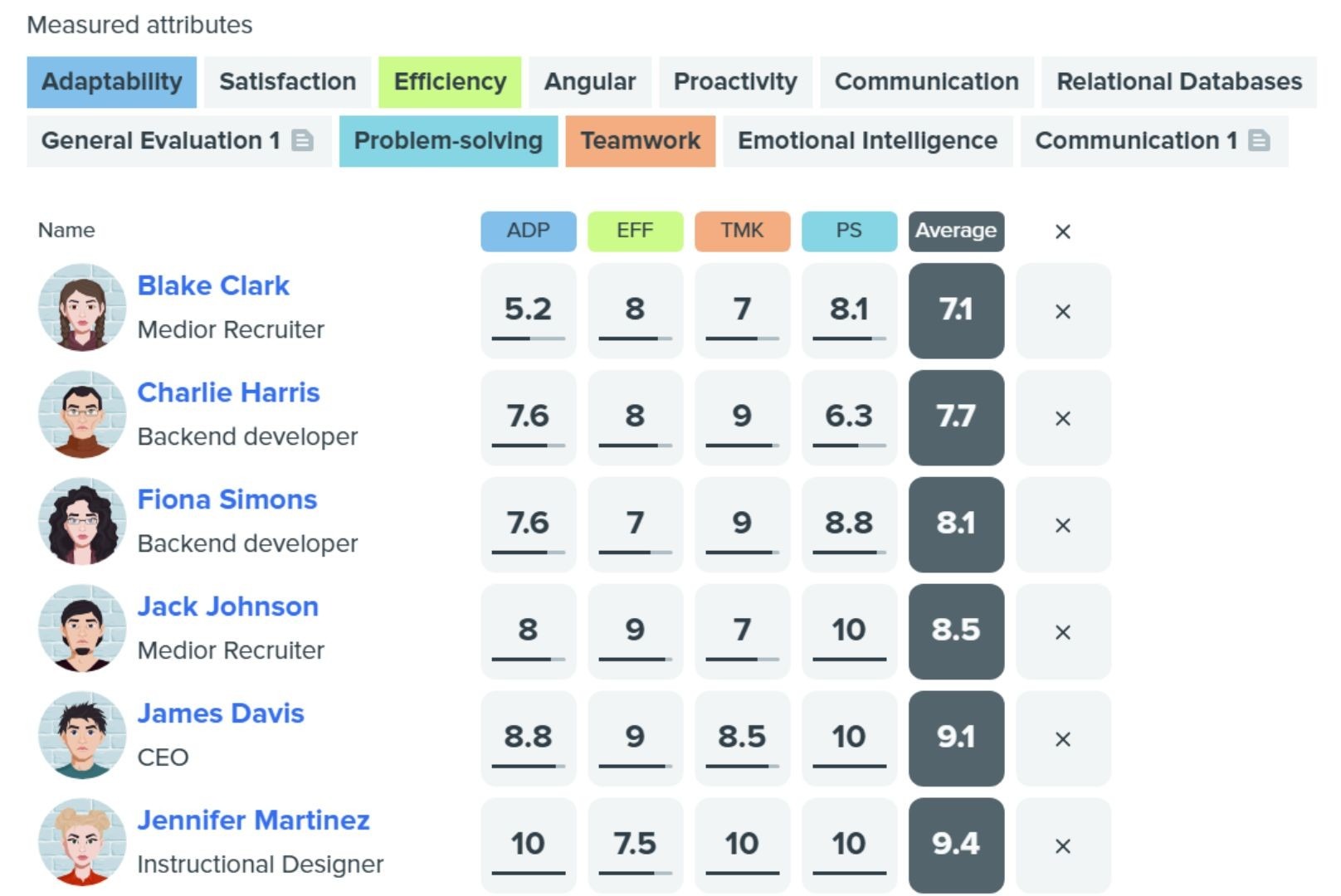
At its core, Kadar isn’t just another HR admin tool. It’s a talent management system designed around skill-based performance reviews. Instead of scattered notes and generic ratings, it brings together a full 360 feedback perspective: self-assessments, peer input, manager evaluations, direct reports, and even external feedback from clients or partners.
💡 Deloitte research shows strong talent management practices correlate with higher productivity and profitability; top-performing firms are over three times as profitable as low-quality peers.
With Kadar, managers instantly see where strengths and gaps lie, the HR team gets consistent data without having to chase it, and employees understand how their skills connect to development opportunities.
The upside of structured talent management
The real benefit of moving beyond a “good enough” setup isn’t the tool itself, but what the team gains once everything finally works in one place.
For small businesses and growing tech teams, having a structured system makes all the difference. Managers can rely on a single source of truth for 360 feedback, goals, and career development. The HR team can stop spending hours reconciling scattered data and finally focus on building capability. And employees no longer have to guess how their performance is measured — the path forward becomes clear and concrete.
When talent management moves from fragmented to structured, career growth becomes visible instead of assumed. Reviews naturally connect to action plans, which feed into one-on-one meetings, and progress can be tracked across quarters.
What once felt like endless admin work turns into a repeatable, connected loop of improvement — one that teams actually use and benefit from.
From spreadsheets to structure: your next step
“Good enough” works until the team outgrows it. If feedback is scattered, goals don’t lead to action, and HR is buried in admin, it's time to consider a talent management tool that brings everything into one place, creates a 360 skills-based view of employees, and connects career growth to clear criteria.
A simple pilot is often the best way to understand whether a new system fits your team. Run one performance review cycle with a small group and observe how well the process supports feedback, highlights skills, and reduces manual work. If the flow becomes smoother and teams engage more naturally, it's a good indication that HR tool will be worth adopting more broadly.