

Scaling an organization past 50 employees changes everything. The culture that once felt close-knit begins to shift; processes that worked in a small group start to break down; and essential details slip through the cracks. What used to be manageable with spreadsheets and ad hoc check-ins quickly becomes confusion, missed one-on-ones, unclear career paths, and HR trying to hold it all together manually.
These are early warning signs of chaos, and they almost always show up before leaders realize what’s happening.
The truth is, you can’t keep running a growing organization on gut feeling and Excel. To sustain growth, teams need structure, automation, and a talent management tool that grows with them, transforming scattered processes into a system that supports both people and performance at scale.
Why manual talent processes stop working as organizations scale
As organizations grow, they naturally develop new layers of structure. What once felt like a close bond is starting to fragment, and processes that worked informally in a 20-person team no longer scale to 50 or 100 people. Without the right systems in place, this shift quickly creates friction and, ultimately, leads to chaos.
The HR team runs everything manually in Excel
With 20 employees, a spreadsheet works fine. At 50, it’s an inconvenience. HR team spends hours updating rows, chasing managers for notes, and fixing broken formulas. A single mistake can derail a whole review cycle. Instead of focusing on people, the HR team gradually becomes a full-time administrative function, slowing the very growth it should support.
Managers don’t have consistent processes
In a small team, managers can afford to be more flexible and adaptable. But once the organization grows, inconsistency quickly becomes a liability.
Some managers run regular one-on-one meetings and document goals, while others skip them or treat them as casual updates. Employees notice these gaps, and when their growth depends on which manager they report to, the entire system feels unfair. Over time, this inconsistency erodes trust and prevents HR from comparing performance across teams.
💡 According to Deloitte, when managers effectively develop their direct reports, performance can improve by up to 27%, and employees are 1.5 times more likely to exceed their goals. Without consistent processes, those gains remain out of reach.
There’s no standardization or transparency
When teams operate differently, employees lose clarity about how to grow. Typical consequences include:
- Promotions decided on an ad hoc basis, with little documentation.
- Performance reviews based on memory, not evidence.
- Recognition unevenly distributed across teams.
All of this undermines trust and fuels disengagement.
Culture starts to crack
As organizations scale, the culture that once held everyone together begins to shift. Early hires feel the change most: where they once knew every colleague and had an intuitive sense of how to move forward, they now find themselves in a larger system with less visibility. New employees, meanwhile, don’t experience the same sense of belonging because recognition and development aren’t clear.
Without intentional structure, the culture that once felt like a strength starts to fracture.
Teams lose visibility and accountability
As layers of management increase, communication gaps tend to widen. Goals get buried in spreadsheets, follow-ups get missed, and no one has a single view of what’s been promised or achieved. When progress isn’t visible, accountability fades, and performance reviews become guesswork rather than data-driven conversations.
How a talent management tool brings structure to growing teams
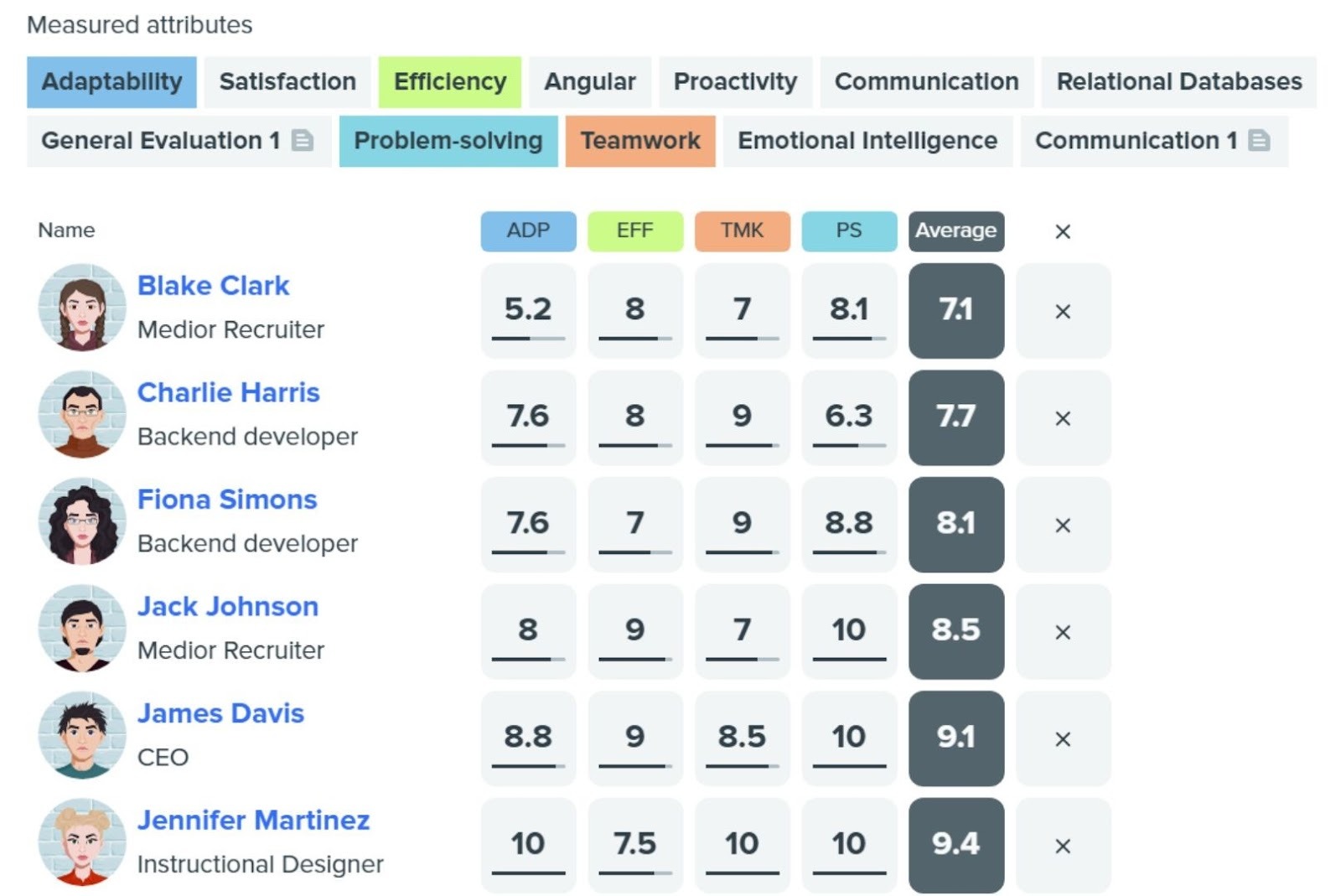
The problems that appear during scaling rarely exist in isolation. Manual tracking creates gaps, inconsistent manager practices undermine trust, and limited visibility makes accountability difficult. When these issues accumulate, startup growth starts to feel chaotic rather than intentional.
A talent management tool addresses these challenges at the system level by replacing fragmented processes with a shared structure. Instead of relying on memory, spreadsheets, and individual manager habits, organizations gain consistency, visibility, and reliable signals for decision-making.
Workflow automation and standardization
(Fixes: Excel dependency, missed follow-ups, ad hoc execution)
Manual workflows are the first thing to break at scale. Reviews stall because forms aren’t sent, follow-ups get lost in spreadsheets, and one-on-ones with top performers depend on personal reminders rather than a shared process. Over time, this turns structured conversations into informal check-ins with no continuity.
A talent management tool automates core workflows like reviews, feedback cycles, and one-on-ones. Deadlines, reminders, and next steps are built into the system, ensuring conversations happen on time and actions don’t fall through the cracks after meetings. This removes operational friction and replaces ad hoc execution with reliable, repeatable flows.
Scalable talent management processes
(Fixes: inconsistent manager practices, uneven employee experiences)
As organizations grow, inconsistency becomes one of the most significant sources of frustration. Some managers document goals and development plans, while others rely on memory or personal notes. Employees quickly notice that their experience depends more on who they report to than on a shared standard.
Talent management tools address this by providing managers with a common framework for running one-on-ones, setting goals, and tracking development. HR defines the structure, but managers execute within the same system. This ensures employees experience the same level of support and clarity regardless of team or manager.
Typical outcomes include:
- HR spending less time enforcing processes and more time on strategy
- Managers knowing exactly how to run growth conversations
- Employees experiencing consistency across teams
Data-driven performance and promotion decisions
(Fixes: memory-based reviews, unclear criteria, gut-feel decisions)
When performance data is scattered across notes and spreadsheets, decisions about promotions and development lose credibility. Employees struggle to understand why decisions were made, and leaders struggle to explain or defend them.
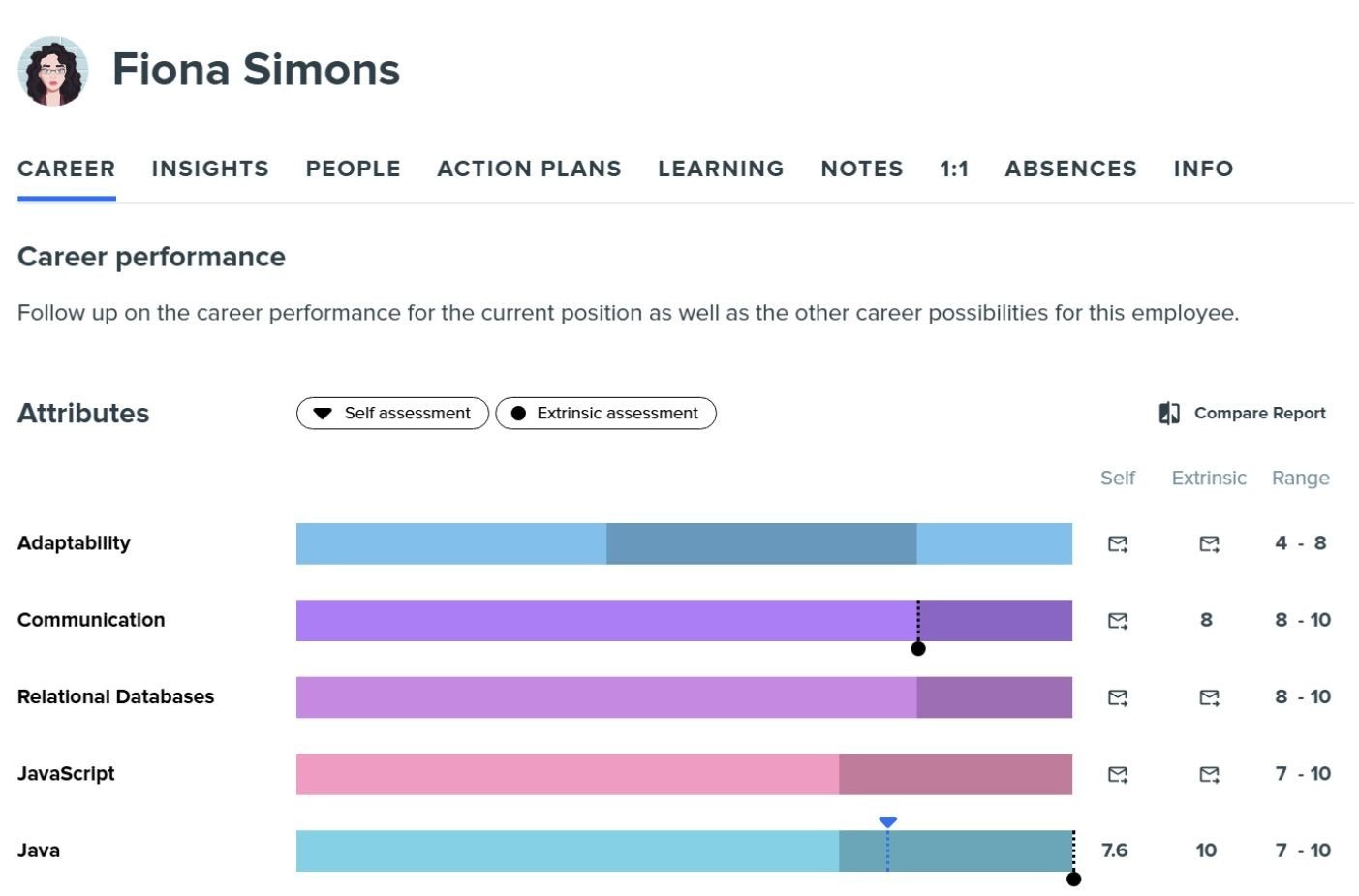
A talent management tool centralizes inputs from self-assessments, peer feedback, and manager evaluations and links them to a shared job leveling matrix. This creates a clear evidence base for performance reviews and promotion discussions. Decisions become easier to justify, more transparent, and more aligned across teams.
With structured data, leaders can clearly see:
- Who is ready for promotion based on defined criteria
- Which teams need additional coaching or support
- How engagement and performance change over time
Consistent culture and team growth at scale
(Fixes: cultural cracks, loss of belonging, unclear growth paths)
Culture often weakens during scaling because growth no longer feels intentional. Employees no longer see how they develop, how recognition works, or how their goals connect to the bigger picture. This is especially noticeable for early hires who remember a more personal, transparent environment.
A talent management tool keeps development visible by documenting goals, recognition, career paths, and individual development plans in one shared place. Growth becomes something employees can see and track, not something that depends on informal conversations.
Key cultural outcomes include:
- Recognition applied consistently across managers
- Clear alignment between individual growth and organizational goals
- Development that feels intentional rather than random
Shared visibility and accountability across teams
(Fixes: buried goals, dropped commitments, unclear ownership)
As teams scale, accountability often breaks down not because people don’t care, but because commitments aren’t visible. Goals disappear into spreadsheets, action items get forgotten, and no one has a shared view of what was agreed or delivered.
A talent management tool creates a single source of truth for goals, constructive feedback, and follow-ups. Managers and employees can see what’s been discussed, what’s in progress, and what’s overdue. With expectations clearly documented and progress visible, accountability becomes part of the system instead of something managers have to chase.
From manual chaos to a structured talent management system
For many growing organizations, the shift isn’t about replacing an old HR platform, but about moving away from spreadsheets, shared docs, and ad hoc processes that no longer scale. What worked at 20 people quickly becomes fragile at 50, and by the time teams reach 100, manual systems create more confusion than order.
At this stage, organizations don’t need complex enterprise software. They need their first real talent management tool: one that introduces structure without adding overhead. The goal isn’t to manage everything at once, but to make core people processes reliable and visible.
The new generation of talent management software is built for exactly this transition:
- Simpler: focused on essentials like 360 feedback, one-on-ones, and goals, without unnecessary features.
- Smarter: surfacing insights that help managers spot patterns and follow through, without extra setup or reporting work.
- Supported: offering real guidance and hands-on support, not just one-time onboarding.
Kadar is a great option for teams taking this first step away from manual chaos. Free for small teams and affordable as they scale, it helps organizations introduce structure from the ground up, bringing automation, visibility, and consistency to talent processes without the weight of enterprise systems.
Act before scaling problems become an expensive risk
The early signs of scaling issues are easy to ignore: HR juggling spreadsheets, managers running processes their own way, promotions decided without clarity. Left unchecked, these issues can lead to disengagement, high turnover, and a culture that no longer reflects the one you initially envisioned.
The right talent management tool turns those weak spots into team strengths. By scaling processes with your team, automating workflows, and giving leaders real data, you can prevent chaos before it sets in.
Kadar is part of that shift: free for small teams, affordable as you grow, and designed to provide ongoing guidance for those included in the process.
Get a future-ready talent management tool today — try Kadar free and scale as you grow.