

Top performers create an outsized impact in every organization. In software teams, a single top performer can deliver several times more value than the rest of the team combined. Losing one often means losing critical knowledge and project stability. The cost of replacing them goes well beyond recruiting expenses; turnover among high performers can slow delivery, frustrate clients, and damage morale across the team.
In return, top talent expects structured development, new opportunities, and a personalized approach. Yet, after performance reviews, many organizations fail to provide them with a structured career growth path.
This guide demonstrates how to keep top performers by leveraging 1:1 meetings as a strategic tool, a system that converts feedback into growth, engagement, and long-term commitment.
Why top talent matters most
Every team has employees who keep the work on track, but top performers are the ones who truly accelerate progress. They do more than deliver on their own tasks: they solve problems others struggle with, mentor less experienced colleagues, and raise the bar for the entire team.
💡 Research from Harvard Business Review shows that high performers contribute up to 400% more than the average employee, and in highly complex roles such as software engineering, their impact can reach up to 800%.
For fast-growing tech organizations, the difference is substantial.
When deadlines are tight, a client project requires stability, or new technologies need to be adopted quickly, top talent provides the leverage that keeps everything moving forward.
Their influence extends beyond output: they shape company culture, transfer knowledge, and often become the benchmark for what “good” looks like.
This is why retaining them is not simply about maintaining employee performance levels. Losing a top performer affects delivery speed, client relationships, and the motivation of everyone who depends on their expertise.
Why top performers are hard to keep
Keeping top performers engaged requires more than recognition. Praise without challenge quickly feels hollow, and ambitious employees interpret it as a signal that their growth has stalled.
High performers have specific traits that make them both valuable and challenging to retain:
- They expect structured development. Career stagnation is the fastest way to lose their trust. If they don’t see a clear path forward, they look for opportunities elsewhere.
- They look for a challenge. Routine tasks may secure short-term output but fail to keep them motivated in the long run.
- They require a personal approach. Generic recognition or one-size-fits-all career growth plans feel irrelevant to people who already operate above the norm.
💡 The Harvard Business Review notes that many high performers leave because they feel overlooked. They are praised for results, but rarely given new opportunities to stretch and grow.
The paradox is evident: managers recognize the importance of these employees, yet often struggle to provide adequate feedback or career direction.
Without a structured way to keep their development visible and intentional, organizations risk losing the very people they can least afford to replace.
Common mistakes that push top performers away
Many organizations recognize that their high performers are critical, yet how they manage career development and 360 feedback often drives those very individuals away.
The most damaging mistakes are surprisingly simple.
Treating 1:1 meetings as casual conversations
Without structure, one-on-one meetings quickly turn into status updates or informal chats. High performers expect these meetings to bring clarity, challenge, and direction. When that doesn’t happen, they stop seeing value in them and eventually disengage.
Losing insights in scattered tools
Notes from performance reviews and 360 feedback sessions often live in spreadsheets, Slack threads, or private docs. Information gets lost, follow-ups never happen, and development progress becomes invisible. For ambitious employees, this signals that their career growth is not a priority.
Offering generic praise
Telling a high performer they are “doing great” may sound positive, but it provides no real direction. Without constructive feedback tied to strengths and a clear roadmap for future challenges, praise feels empty. Over time, this lack of depth undermines motivation.
These mistakes share the same outcome: high performers feel undervalued, under-challenged, and overlooked. And when that happens, they begin looking for opportunities elsewhere.
How 1:1 meetings help keep high performers engaged
Once performance reviews are done, the real work starts: keeping top performers engaged and motivated. And few tools support that better than a growth-focused one-on-one meeting software.
Unlike ad hoc check-ins, strategic 1:1s give high performers three things they value most:
- Recognition with substance → acknowledgment tied to specific strengths, not generic praise.
- Opportunities to grow → new challenges and responsibilities that expand their role.
- A clear path forward → knowing where they’re headed and how to get there.
💡 According to Gallup, 42% of voluntary employee exits could have been prevented if managers had initiated the right conversations early.
This highlights why 1:1 meetings are more than a formality; they are a critical lever for retaining top talent.
For high achievers, the absence of such conversations often signals that their growth isn’t a priority. But when 1:1s are run consistently and with purpose, they become the space where recognition meets career development.
And instead of waiting for frustration to build, managers use these sessions to align on goals, surface challenges, and set a clear direction, exactly what ambitious employees need to stay committed.
Keeping top talent engaged with structured 1:1s in Kadar
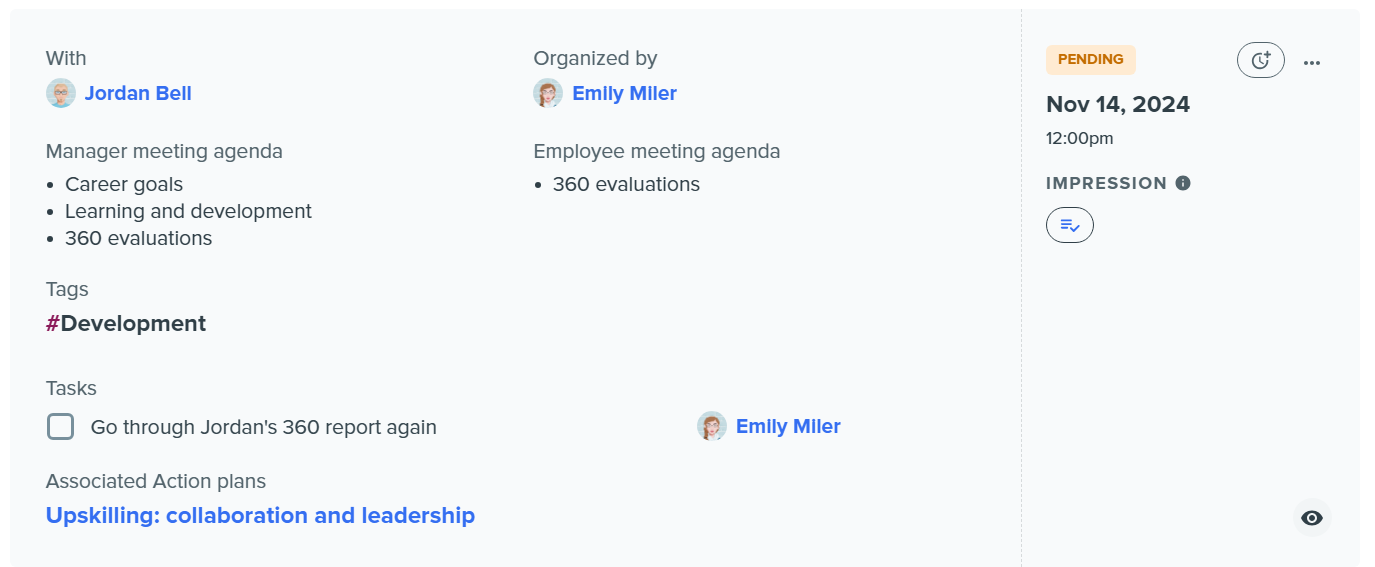
Kadar was designed to remove the guesswork from retention conversations. Instead of relying on scattered notes or casual check-ins, managers get a structured system that transforms every 1:1 meeting into a growth milestone, including:
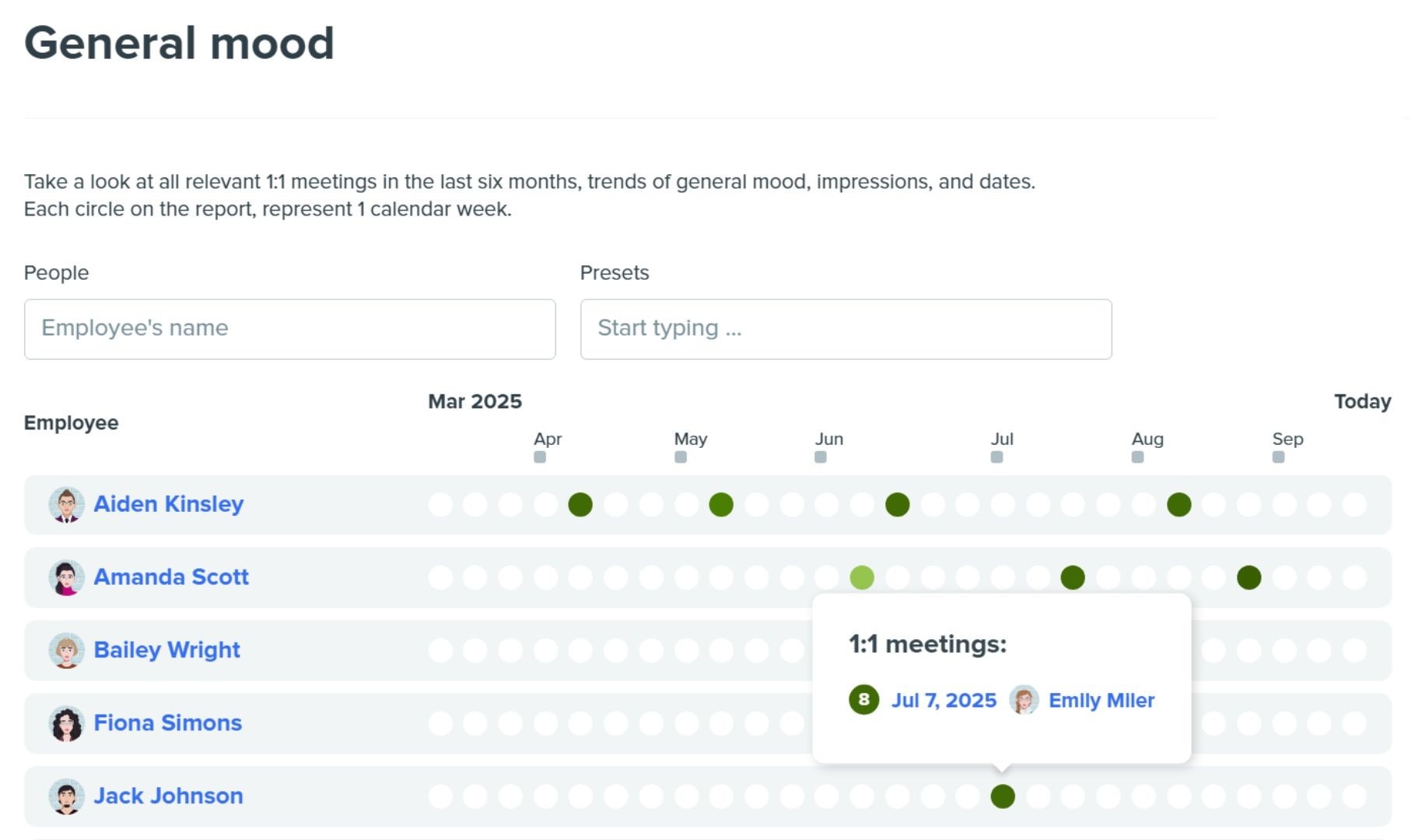
- Quantified outcomes → each meeting generates clear, visual insights that can be tracked over time.
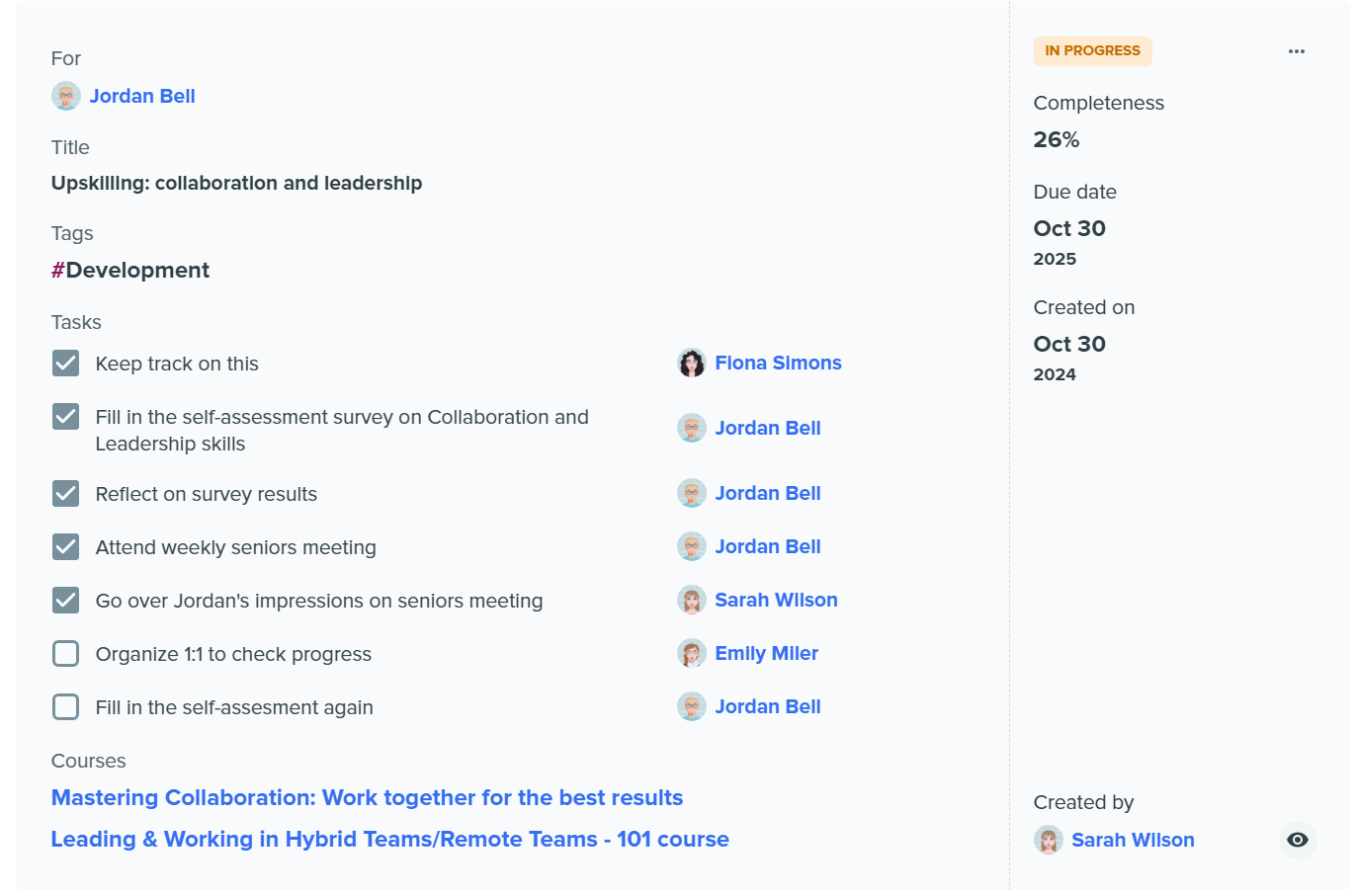
- Integrated action plans → follow-up steps are captured on the spot, so progress never disappears after the conversation.
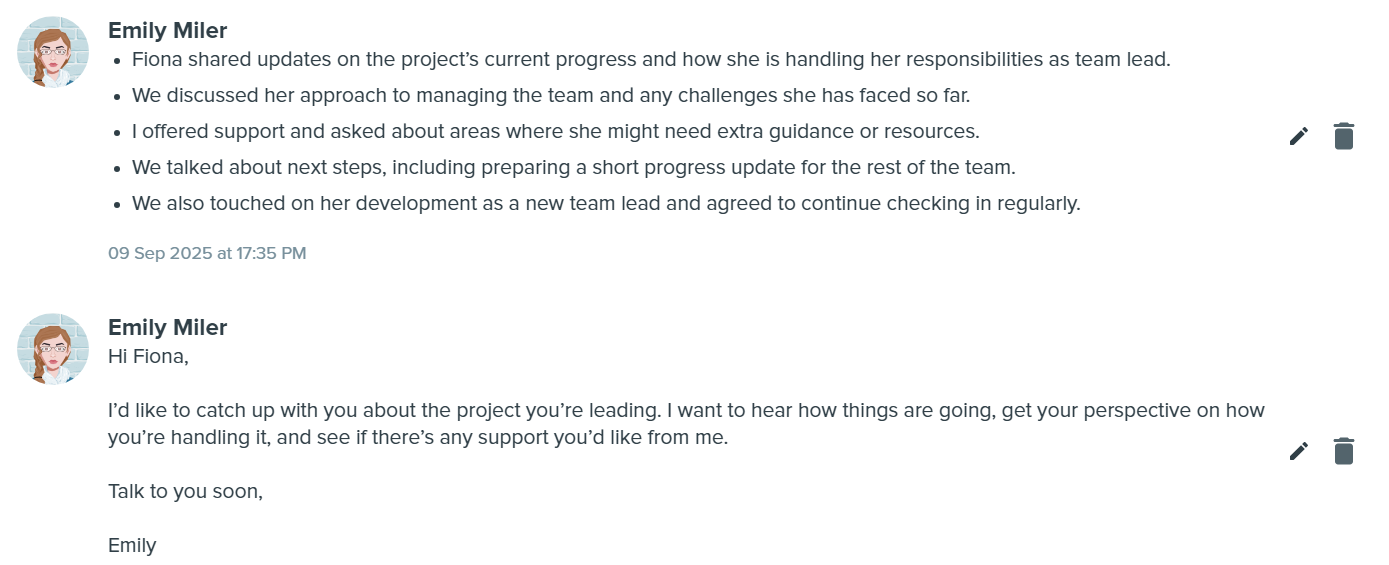
- Long-term visibility → meeting notes stay in one place, making it easy to revisit past conversations, track progress, and spot trends early.
For top performers, this means 1:1s finally deliver on their expectations: genuine recognition, challenges that keep them motivated, and a clear employee development path.
Keep top performers committed through better one-on-ones
Top performers are the employees your organization can't afford to lose. They deliver impact far beyond their individual roles, raise the standards of the entire team, and often decide whether projects move forward or stall. Yet even the best people leave when they don't see a path forward.
If you’re wondering how to keep top performers motivated and engaged, structured 1:1 meetings are one of the most effective tools you can implement. With recognition tied to real strengths, challenges that push growth, and clear next steps, high performers stay motivated, engaged, and committed.
Kadar makes this process consistent. With growth-focused one-on-one flows, integrated action plans, and long-term visibility, managers gain a system that turns conversations into progress, ensuring that top performers continue to grow within the organization, rather than elsewhere.
Discover how Kadar helps tech organizations to leverage 1:1s as a genuine retention tool.