

Most managers already run 1 on 1 meetings with employees, but the results are often underwhelming. Instead of driving employee growth and engagement, these conversations slip into routine updates that change little once the call ends. Notes get buried in personal docs, follow-ups are forgotten, and every manager runs the process differently, leaving employees with inconsistent experiences.
Research shows that when done well, 1:1 meetings are the single most impactful tool for talent retention and employee performance. The problem is not the lack of 1-on-1 meetings with employees, but how they are structured.
Why 1 on 1 meetings with employees often fail
Even when companies insist on regular check-ins, most 1 on 1 meetings with employees fall short because they lack clear structure and consistency. The same issues show up across teams and gradually erode trust in the process:
- Inconsistent frequency. Skipping sessions or ad hoc rescheduling breaks continuity, making development feel optional rather than essential.
- Too operational. 1:1 meeting agendas get dominated by project updates, while long-term goals and development topics remain untouched.
- Low employee ownership. When managers control the entire agenda, employees disengage and miss opportunities to shape their own career development.
- No clear next steps. Conversations end with “good points” but no documented actions, owners, or follow-ups, so nothing changes by the next meeting.
- No visibility into outcomes. Without tracking discussed topics or completed actions, leaders can’t tell whether one-on-ones are helping or just taking up time.
Common fixes that don’t solve the problem
When managers notice that 1-on-1 meetings with employees aren’t working, they often try to patch the process with quick fixes such as new templates, tighter agendas, or more notes. Unfortunately, these approaches rarely solve the core issues:
- Generic templates → one-off 1:1 meeting agenda forms help once, but they don’t adapt to goals or track progress across multiple meetings.
- Operational check-ins → when a 1:1 meeting is reduced to task updates, career development goals vanish from the conversation, leaving employees disengaged.
- Spreadsheets and shared docs → notes exist, but without reminders or accountability, follow-ups disappear, and employees feel nothing really changes.
The outcome is always the same: more admin, more notes, but no measurable improvement in employee engagement or performance.
How to run effective one-on-ones in 5 steps
Turning 1 on 1 meetings with employees into a real engagement driver doesn’t require complex processes, but structure and consistency. A simple five-step framework helps managers and employees make every 1:1 session meaningful, actionable, and measurable.
Step 1: Prepare the agenda together
The most effective 1:1s start before the meeting. Instead of the manager owning the entire 1:1 meeting agenda, employees should propose two or three topics to cover, ranging from blockers to career goals. The manager then adds prompts that steer the conversation toward career development, honest, constructive feedback, or long-term priorities.
This shared preparation ensures that the agenda reflects both sides, not just immediate project updates.
Step 2: Keep the conversation balanced
A good 1:1 meeting with employees balances today’s tasks with tomorrow’s growth. As a rule of thumb, follow the 50–30–20 rule:
- 50% development and career discussions
- 30% blockers or challenges
- 20% status updates
Step 3: Make it employee-centred
The best 1:1 meetings aren’t manager-driven, but employee-led. Encourage team members to bring their own priorities and reflections. When employees shape the 1:1 meeting agenda and capture their own takeaways, they stay engaged and accountable.
This way, the one-on-one meeting becomes a safe, development-focused space, not a top-down report.
💡 Gallup finds that only 16% of employees say their recent conversation with a manager was incredibly meaningful. This suggests that most one-on-ones fail to create progress or a sense of direction, highlighting how far organizations are from using these meetings as the strategic tool they’re meant to be.
Step 4: Listen more than you talk
Great managers don’t dominate 1:1 meetings; they ask, listen, and guide.
By asking open-ended questions such as “What’s blocking you?” or “What are you proud of this week?”, you surface insights that don't appear in task updates. Careful listening helps you catch early signs of disengagement, frustration, or burnout, long before they show up in surveys or performance metrics.
Step 5: Close with clear next steps
Every 1:1 should end with clear commitments that have an owner, a deadline, and an expected outcome. This creates continuity between meetings, so progress can be reviewed instead of being reset each time.
When action items carry over into the following conversation, employee development becomes measurable. Without this step, even great conversations remain motivating in the moment but rarely lead to lasting change.
💡 Gallup research shows that meaningful feedback isn’t just about what’s said, but how it’s delivered and followed up. The most impactful conversations are future-oriented, focused on individual strengths, and frequent. When feedback connects today’s actions to future expectations, employees gain clarity on how their work contributes to broader organizational goals.
How Kadar helps you fix 1 on 1 meetings with employees

Most HR tools rely on generic templates for one-on-ones, but templates alone don’t fix broken processes. Kadar was designed as a manager-first one-on-one meeting software for tech teams, built to bring clarity, continuity, and visibility into every conversation.
Meeting agendas connected to real goals and skills
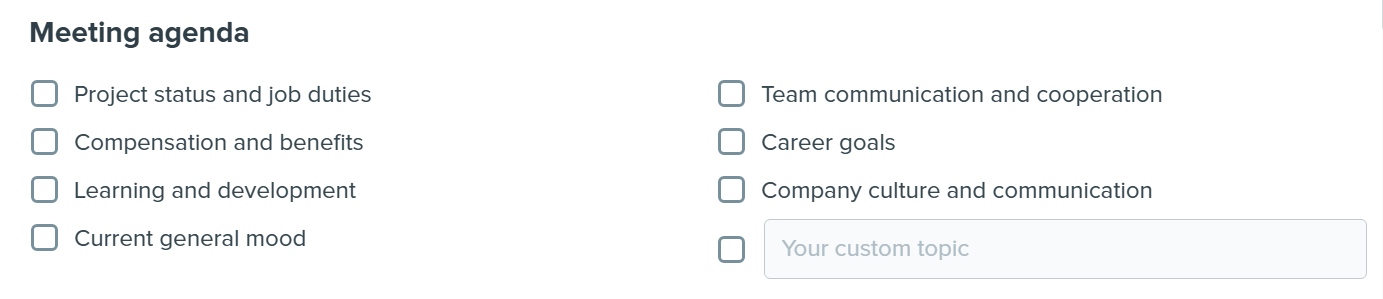
Instead of rigid, one-size-fits-all forms, Kadar offers flexible 1:1 meeting agendas that managers and employees can adapt to each conversation. Agenda prompts are tied to development goals, role expectations, learning areas, and career discussions, keeping meetings focused on growth rather than drifting into routine status updates.
Meeting notes that create continuity, not clutter
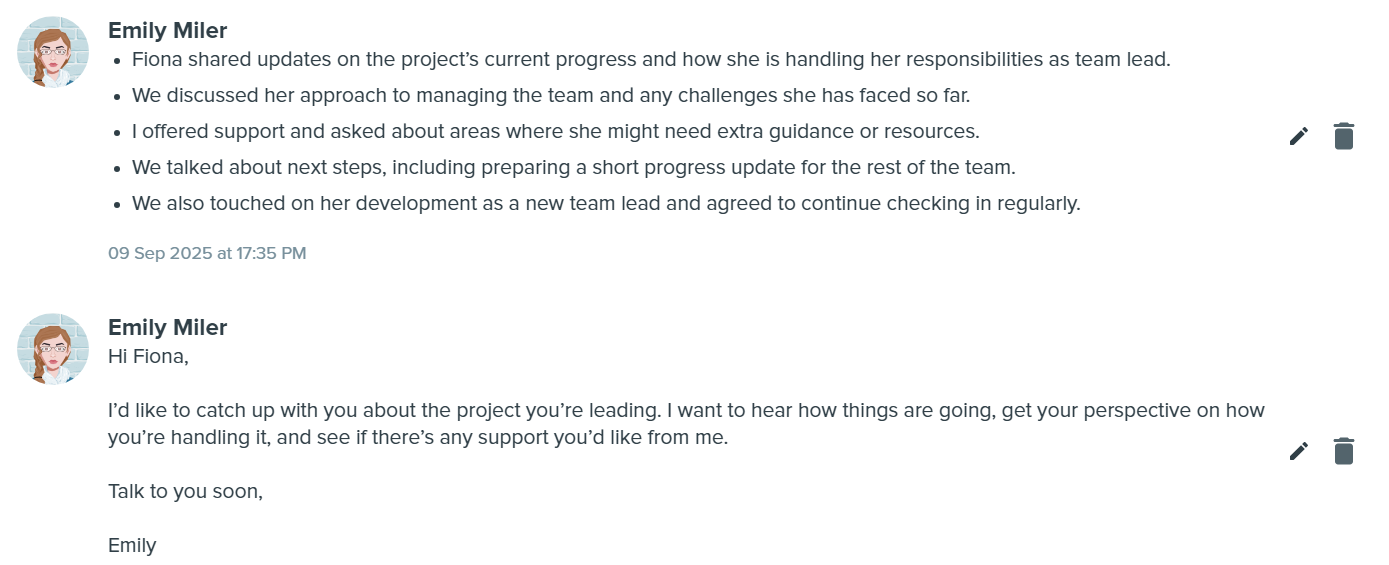
In many teams, 1:1 meeting notes live in personal docs, notebooks, or private folders, making progress hard to track and easy to forget.
With Kadar, meeting notes are captured in one shared place and carried forward into future conversations. This continuity prevents discussions from resetting every time and ensures past context, commitments, and insights inform what comes next.
Employee ownership that drives accountability
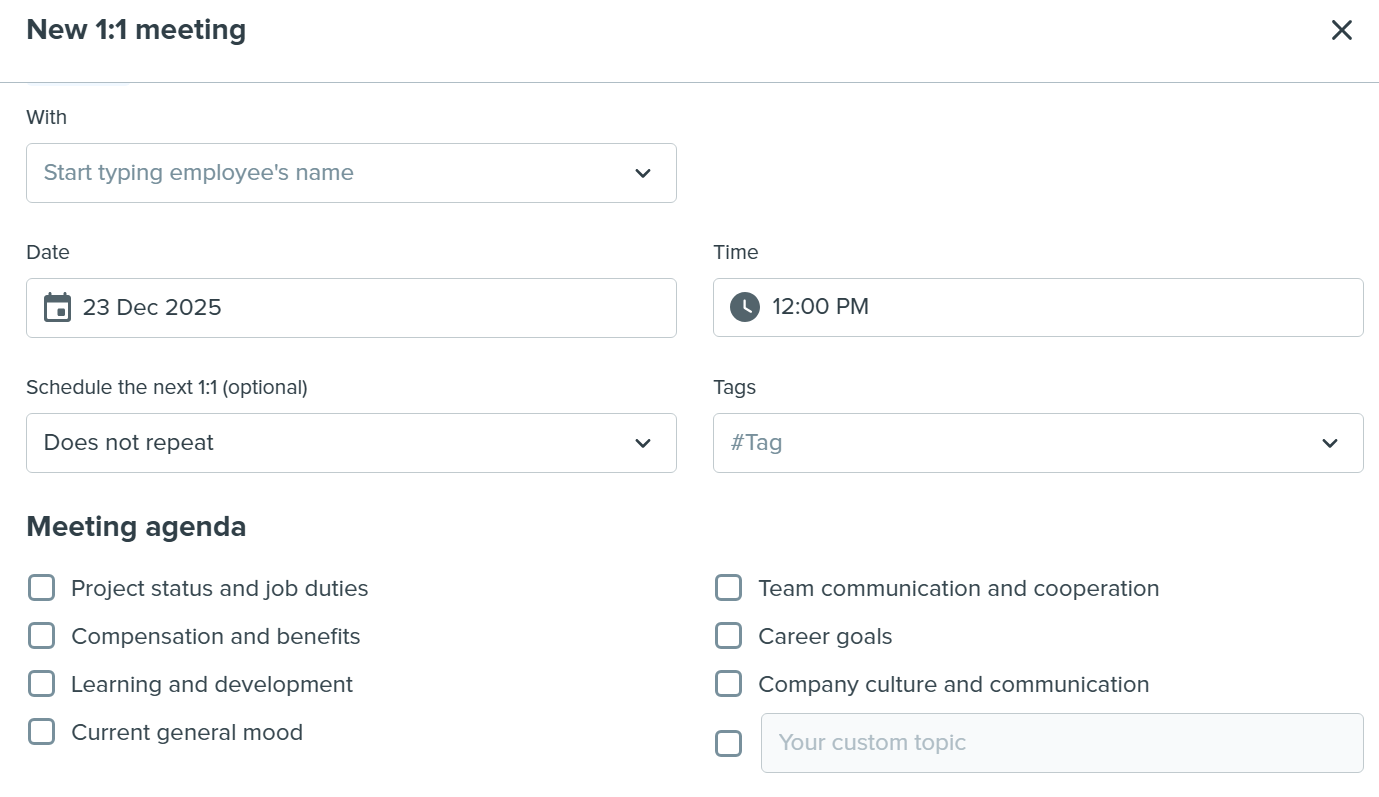
The most effective one-on-ones work best when top talent has real ownership of the conversation. Kadar supports this by allowing employees to propose 1:1 meeting agenda items, take notes, and schedule meetings themselves.
This shifts one-on-ones away from passive updates and toward shared accountability, with managers acting as coaches rather than drivers of the discussion.
💡 One of our clients shifted ownership of 1:1 meeting preparation to employees. Team members now prepare agendas, take notes, and set goals, while managers focus on coaching and support. The result is clearer ownership of development and more consistent, meaningful conversations over time.
Action plans that continue beyond the meeting
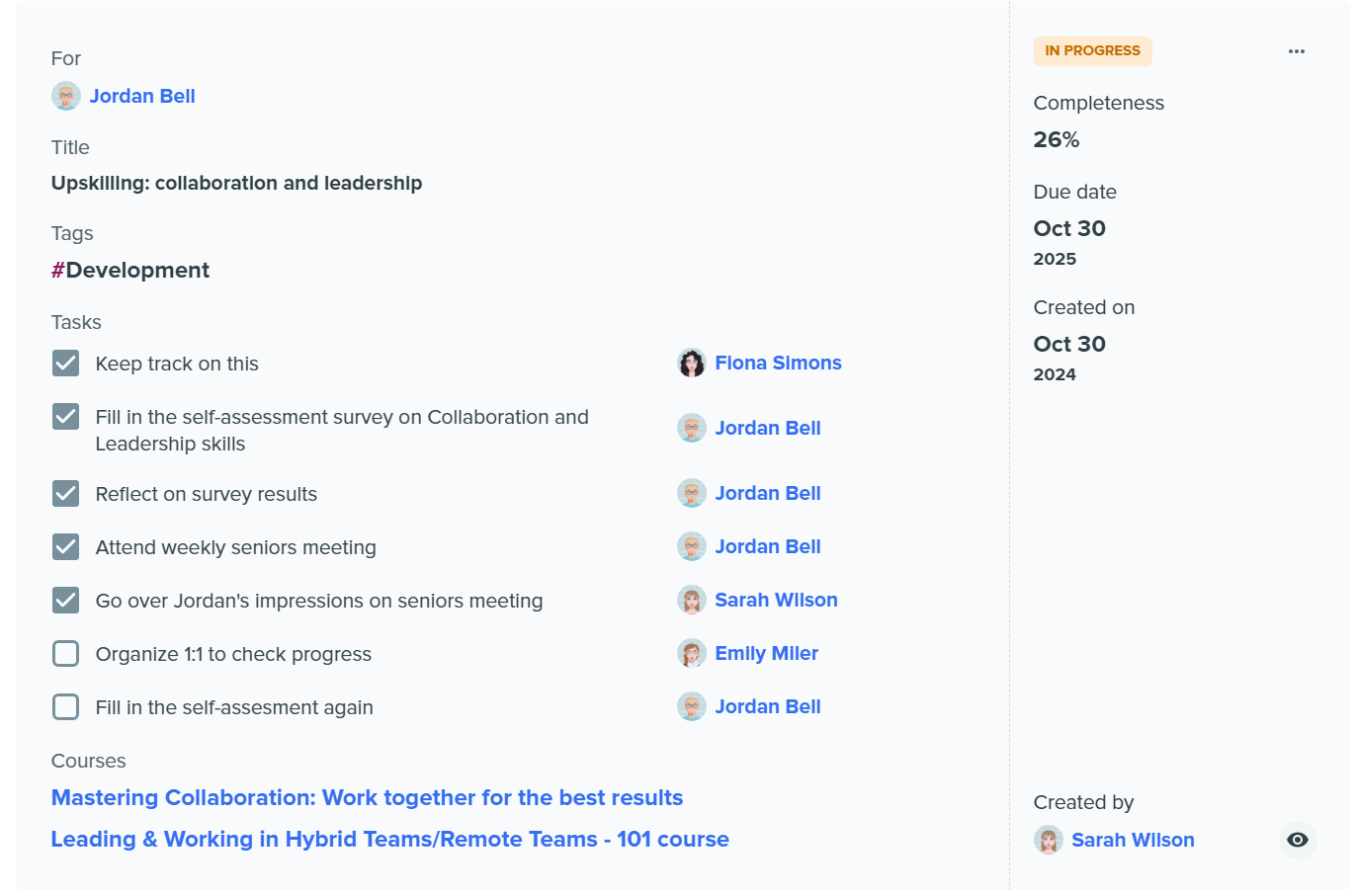
A one-on-one without follow-up is wasted effort. In Kadar, decisions made during the meeting turn into action plans with owners, deadlines, and reminders. These commitments stay visible between meetings, making progress easier to track and conversations easier to continue.
Analytics and trends that guide HR decisions
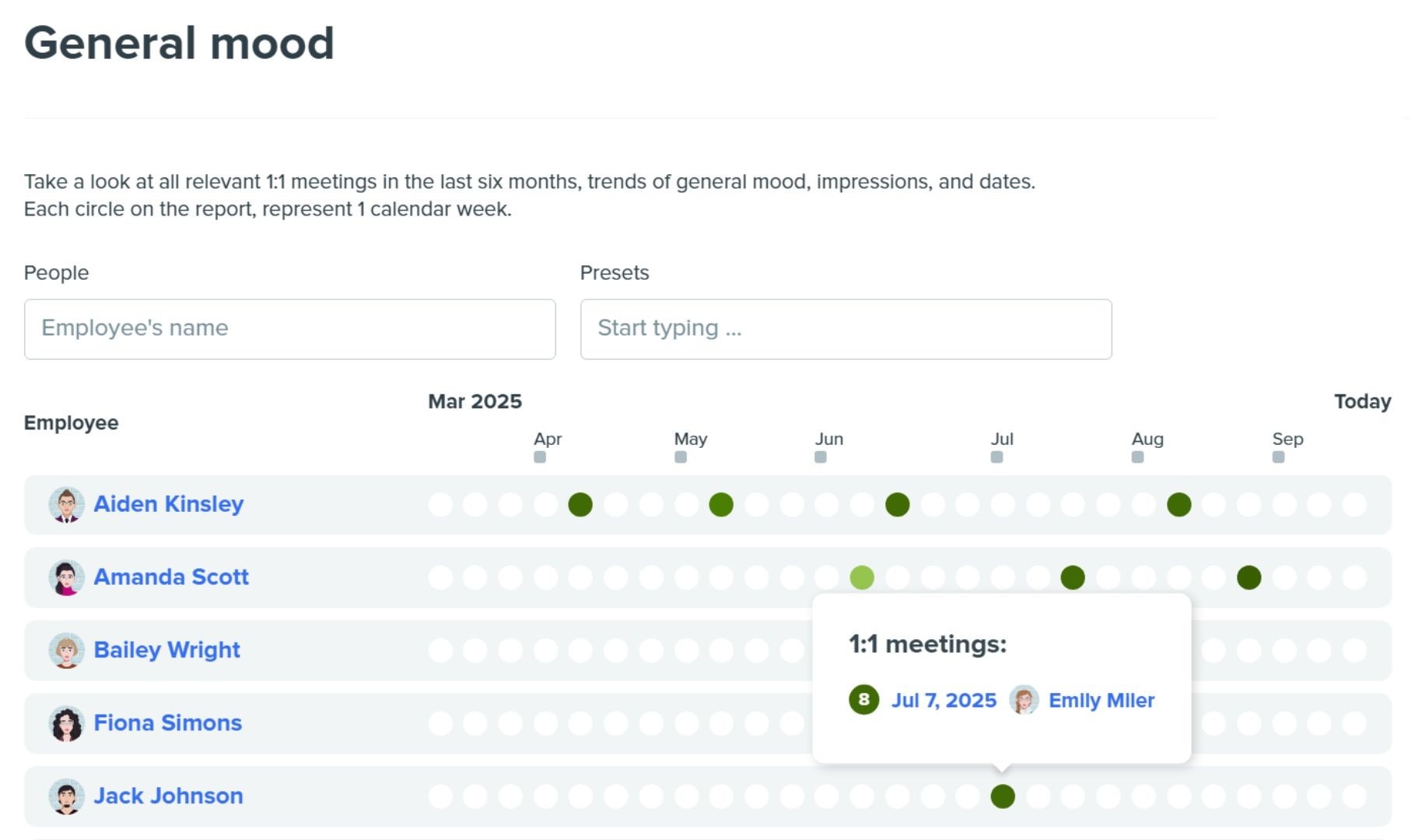
Kadar turns one-on-one insights into trackable signals, including action completion rates, recurring themes, and general mood. Over time, these trends reveal who is progressing, where risks are emerging, and how managers are supporting their teams. HR and leadership gain a clear view of what’s happening without chasing updates or building manual reports.
Turning one-on-ones into growth, not routine
If your 1 on 1 meetings with employees end without clear actions, follow-up, or visible progress, they aren’t helping your team grow; they’re just another meeting on the calendar.
The difference comes from structure: shared 1:1 meeting agendas, action plans that carry forward, and trendlines that show whether conversations are working.
Kadar brings all of this into one flow. Managers get consistency, employees get ownership of their career growth, and HR finally sees the bigger picture. No extra dashboards, no scattered notes, just one system where development becomes part of everyday work.