Performance reviews are the process most teams have already tried to fix at least once.
The cycle closes, and someone opens a spreadsheet to work out whether anything moved. Team by team, by hand. By the time the picture is ready, the quarter it describes is over.
A manager sits down for a 1:1 and wants to know how someone has moved in two years. Three cycles, three questionnaires, a note somewhere. The conversation runs on memory.
1
Reviews that were meant to happen and did not.
2
Every team on its own cadence and its own form, so nothing compares.
3
Two steps only, the employee and their manager, because every extra step is more manual work.
4
No company-wide picture of where people stand.
5
Performance kept apart from everything else known about a person.
Kadar clears each of these.
How it fits your team
Your company already decided how it evaluates people. The setup starts there.
01
Built against your roles and your levels
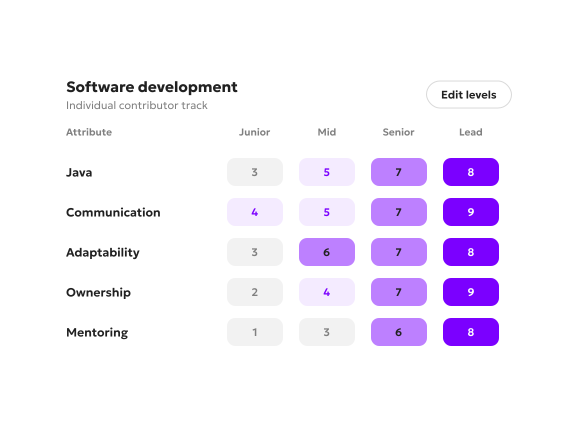
The review is built against the roles, levels and competencies you already use, instead of a generic form you fill in around your team. Whether you started them from a template or built them from scratch, they stay yours to edit, and the review reads from them.
You do not need any of it in place to start. Without it you set the cycle up by hand, which works and takes longer. Once it is there, the cycle builds from it.
02
Your cycle, your steps
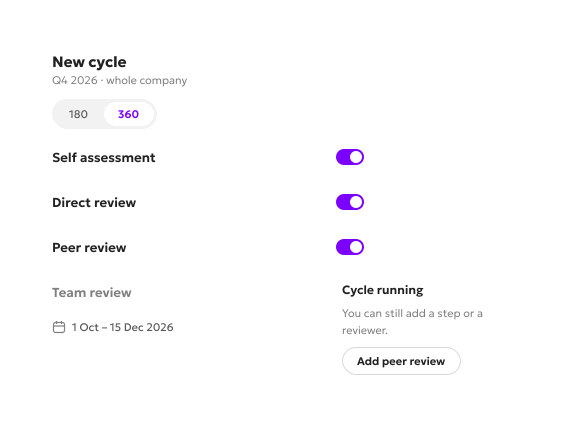
How many steps a cycle has, who reviews whom, 180 or 360, self, direct, peer and team. You set it when you open the cycle, and it can still be changed once the cycle is running.
03
Who sees what, decided by you
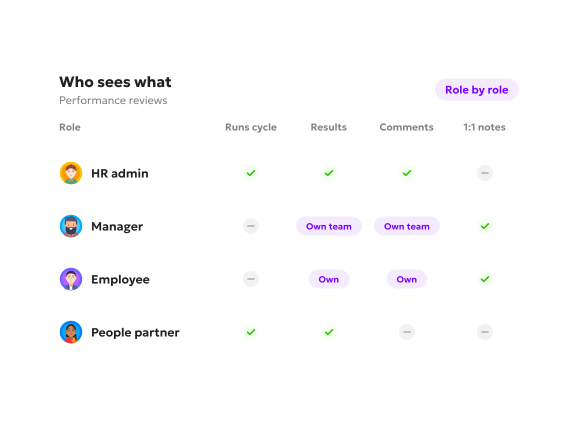
Who owns the review process, and who sees what comes out of it, are decisions about how your company runs. You decide, role by role.
04
Different questions for different teams
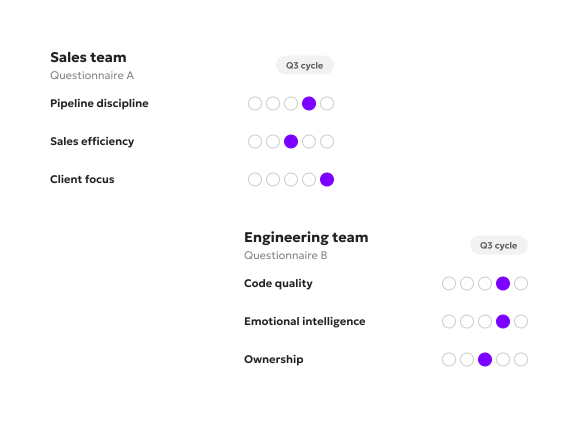
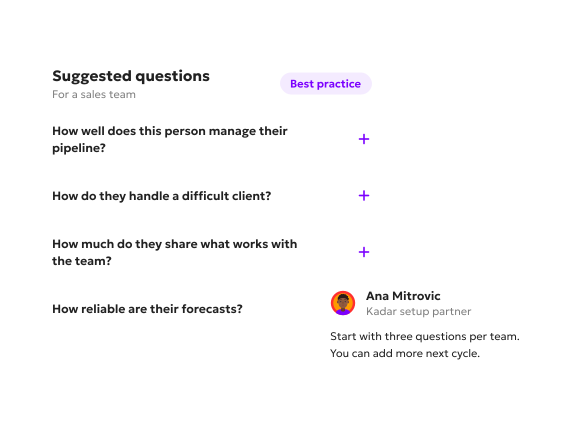
One cycle can carry more than one questionnaire. A sales team and an engineering team are not measured on the same things, and they do not have to answer the same form to sit in the same process.
Teams define what matters to them. We have seen everything from sales efficiency to emotional intelligence. You can look at results for a whole team, or for one person.
05
What the cycle leaves behind
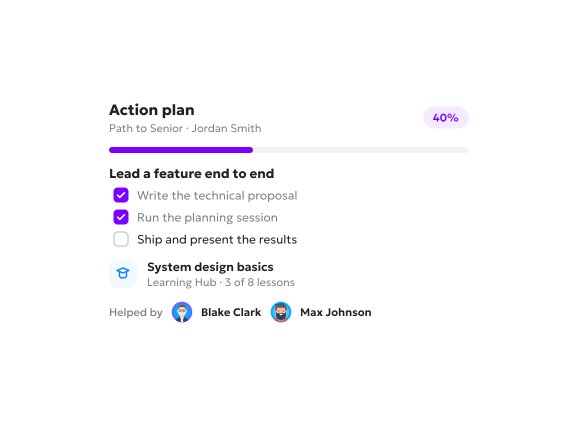
A cycle ends with an action plan for the months after it. Goals and sub-goals sit under it, closer to a development plan than a target. Someone aiming for senior has the steps written down and the people who help are named.
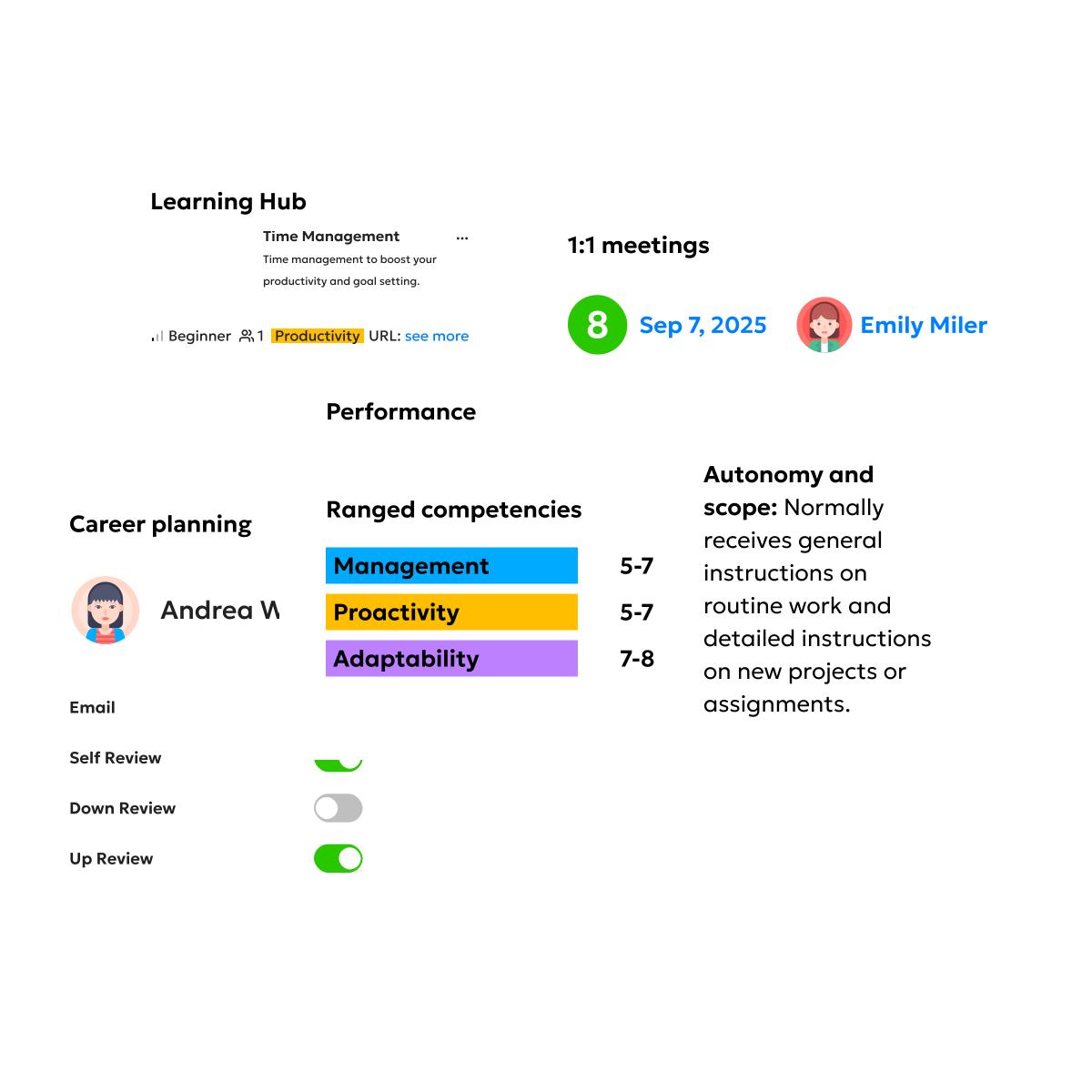
You can attach material from the Learning Hub to a plan, and follow on the person’s profile how far they have got.
What it looks like day to day
The same cycle, from three sides.
1
For HR
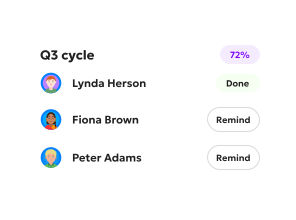
Sets up the cycle, the questions and the steps. Runs it from a board that shows who has filled in what while the cycle is live, and sends reminders instead of chasing people in chat. Then helps managers make sense of the results.
2
For managers
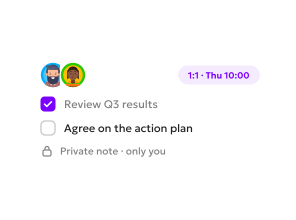
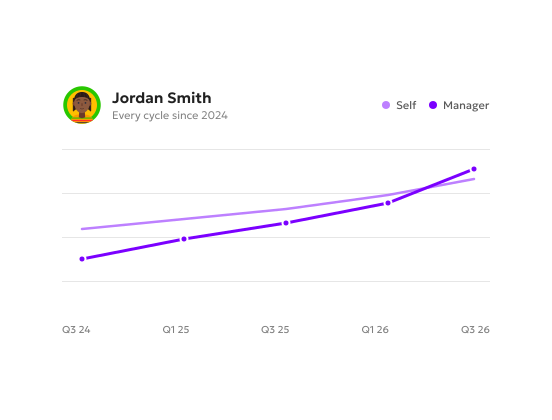
Sees how each person on the team has moved over time, adds their own assessment, runs the 1:1, and leaves it with an action plan for the months after.
A 1:1 does not have to wait for a cycle to close, and what each side sees of it follows the same permissions as everything else. There is a private note for what you keep to yourself.
3
For employees
Sees their own results over time and self-assesses, and can ask for a 1:1 rather than waiting to be given one.
Set up with you
Your HR team owns the setup, and we work through it with you as far as you want.
Teams ask for best practices, for suggested questions, for what usually works.
This comes with the setup. Everywhere else you either do this alone, or you pay for an implementation that gives every client the same setup.
One profile per person
Every cycle a person goes through stays on their profile. The next review starts from that history instead of from scratch.
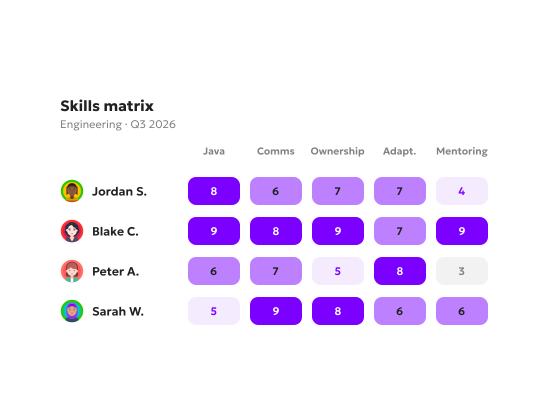
You also get group reporting: a skills matrix, and two people’s results side by side on the same attributes.
How teams run performance reviews in Kadar
Teams start by deciding what they want to measure, which is rarely the same from one company to the next. From there it is usually different questionnaires per team inside one cycle, and results read both across the team and down to the person.
FAQ
Can we run 180 and 360, or do we have to pick one?
Either. You choose the steps when you open the cycle: self assessment, direct review, peer review, team review, in the combination that matches what you are trying to learn.
Who sets it up?
Your HR team owns it. We work through the setup with you as far as you want, including the part teams actually ask about, which is what to put in the questions.
Different teams need different questions. Is that one cycle or several?
One. A cycle can carry more than one questionnaire, so each team answers what is relevant to it and the results still sit inside the same process.
What happens to the results after a cycle closes?
They stay with the person. Every cycle stays on their profile, so the next review starts from that history instead of from scratch. You also get group reporting on top of that.
How is Performance packaged?
Performance review software is one of Kadar’s modules, appraisals included. You switch on the modules you use.
Got a question we didn't cover?
Book the 15-minute demo and ask. We'd rather answer it directly than guess what you meant on a page.
Performance shaped to fit how your team actually works.